
"Best IT career for beginners 2026: QA, cybersecurity, or business analysis?" Asked plainly, the question is this: which path gives a beginner something real to build on, and which one only looks simple at the start. The Missing Evidence in …
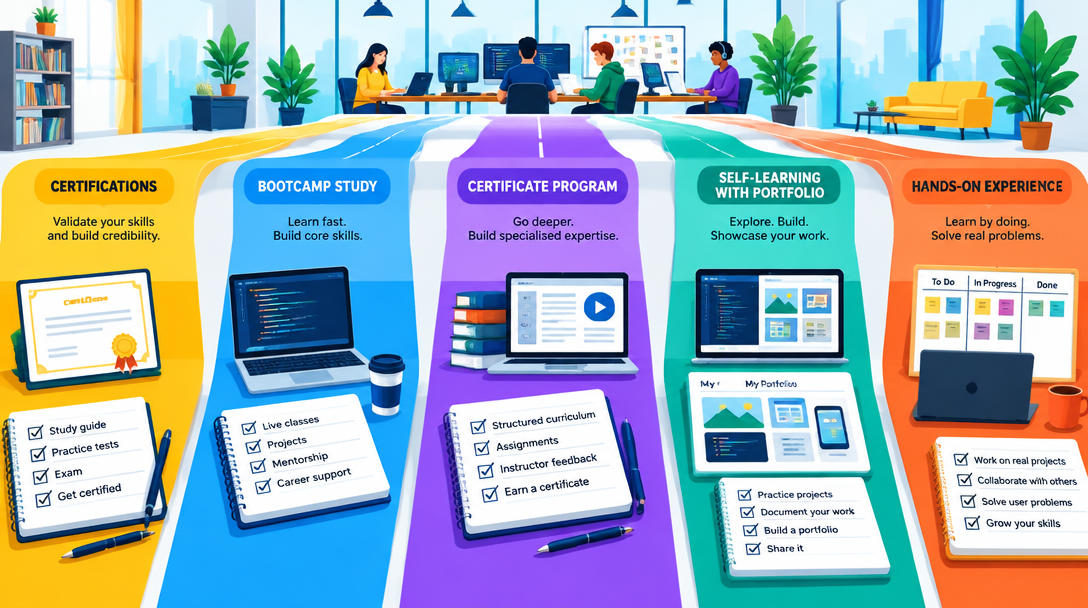
A tech degree is not the only entry point. What matters is proof: skills, projects, certifications, and experience you can show. These five practical paths help degree-less career changers build that proof in different ways.

The Tableau-or-Power BI question is really about where you want to work and who will judge your work. This guide maps each certification to in-house, freelance, and consulting paths.

Remote IT beginners rarely lack talent, they lack visible proof. Here’s the realistic route into help desk, support, and junior roles, built around evidence employers can actually see.

Five hours and a free badge may be all you need to test whether tech is a real path. Here’s how to pick the right credential and turn it into resume proof.

A beginner can prepare for entry-level QA in 4–8 weeks. The real gap isn’t tool knowledge: it’s learning to write clear, actionable bug reports, starting with the title.

You added AI tools and funded more training. The suite still flakes. The real problem isn’t skills, it’s that your tests still expect software to stand still.

Millions in women-in-tech scholarships go unclaimed not for lack of money, but because most are built for full-time degree students. Here’s how career changers can use proof of work to unlock the doors that are actually open.

Remote job hunting fails before the interview. If recruiters can’t find your profile by exact skills and certifications, your talent never enters the room.

Open roles stay open while capable pattern-spotters get screened out. The real gap is in hiring and training systems built around one narrow cognitive style.
The real cost of a business analyst certification isn’t the exam fee, it’s months spent learning the wrong skills. Here’s how to choose based on the decisions you actually make.

A practical case study showing how a career changer in her 40s used Grade Builder’s AI tutor and beginner QA course to land her first remote testing job, with tips on overcoming age bias and building confidence.

Before you learn to code or chase a CTO, learn to run cheap, structured experiments on your own assumptions. That skill decides whether your startup fails early or late.

Most adaptive platforms personalize the ride, not the diagnosis. The real question is whether your course adapts to your errors, or just keeps you moving.

The usual advice for women in cybersecurity pushes everyone toward the terminal. The faster path for many career changers runs through governance, risk, and compliance, where skills you already have start paying off.

Most free IT learning fails not because the resources are bad, but because learners pick the wrong tool for their actual problem: memorization, pacing, or finding one answer fast. This piece shows how to match the platform to the specific gap.

The skills that make many neurodivergent people thrive in software: systematic thinking, precision, and comfort with rules, map just as well to the shop floor. So why did the conversation stop at a keyboard?

Bootcamp or degree? The job posting already tells you the answer, but most career changers misread it. Here’s how to sequence them so each one costs you less.
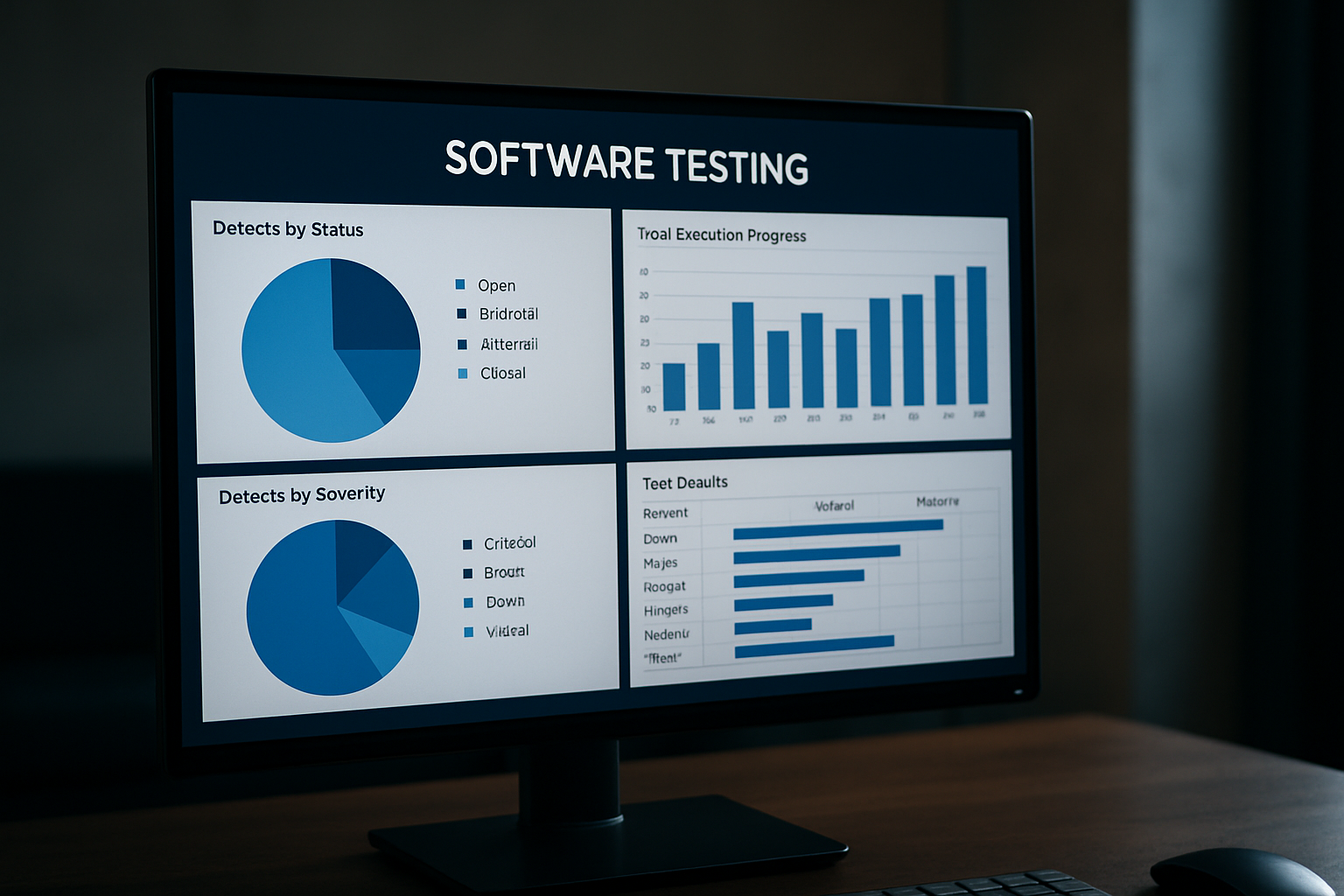
Software testing is a cornerstone of modern development, ensuring that products not only meet user requirements but also deliver reliability, security, and performance. As the complexity of software grows, so does the toolkit available to quality assurance (QA) engineers. Whether …

In today’s dynamic tech landscape, where software evolves at lightning speed, understanding version control is essential for anyone who aspires to build a meaningful career in technology. Among all version control systems, Git stands out as the most influential and …